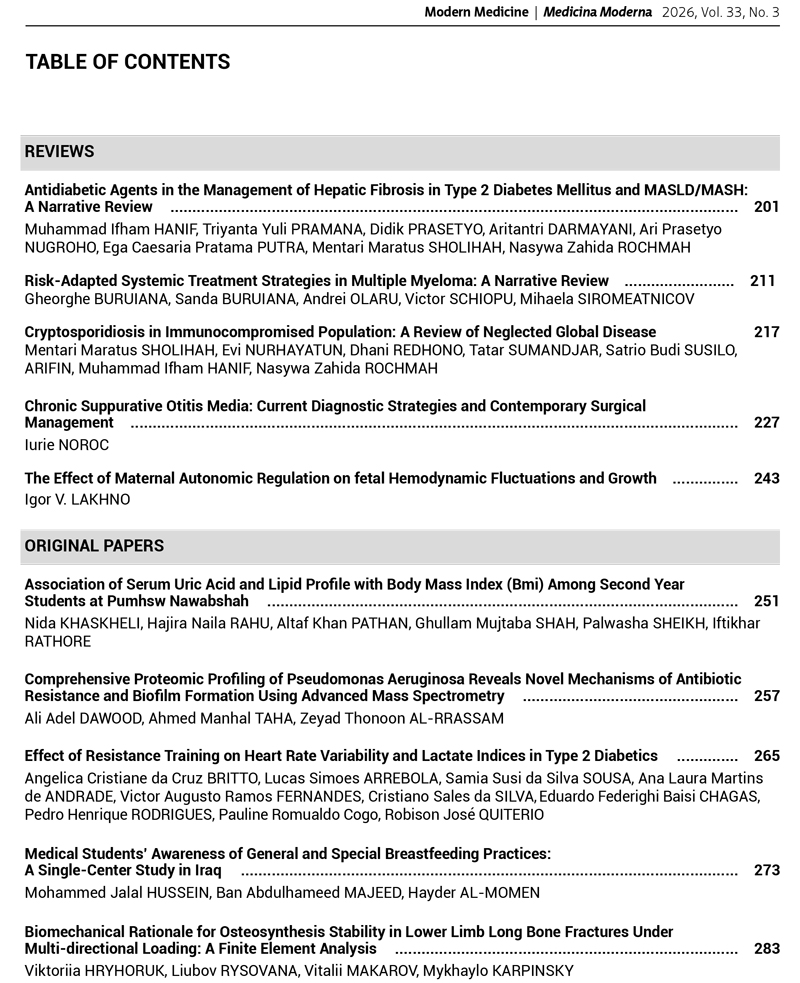
Background: Pseudomonas aeruginosa is an opportunistic and pathogenic bacterium that causes severe nosocomial infections that are growingly antibiotic resistant. The manipulation of proteomic variations under various growth conditions is of importance in designing new therapeutic approaches. Aim: To describe the proteome of planktonic growth, biofilm formation, exposure to antibiotics, and nutrient starvation of P. aeruginosa by means of new extraction and analytical techniques.
Methods: P. aeruginosa PAO1 was cultivated in four conditions. We used optimized dual enzyme predigestion (trypsin+LysC) using Filter-Aided Sample Preparation. Peptides investigated by Q Exactive HF-X at 90-minutes gradients. Machine learning used in PTM prediction. Limma with FDR corrected statistical analysis was used.
Results: We determined 4,523 proteins containing 387 Virulence-Factors. The formation of biofilm increased the expression of 892 proteins such as quorum sensing regulators. The exposure to antibiotics triggered 523 efflux pumps. We found 1,387 PTMs with 523 sites of phosphorylation. Network analysis showed that there are 10 hub proteins that coordinate virulence mechanisms. Conclusions: This atlas in its entirety shows a new regulatory network. The coverage was enhanced by 35 by the dual-enzyme protocol. The known phosphoproteins are therapeutic targets to interfere with biofilm formation and resistance mechanisms.